The fruit market beside LCC
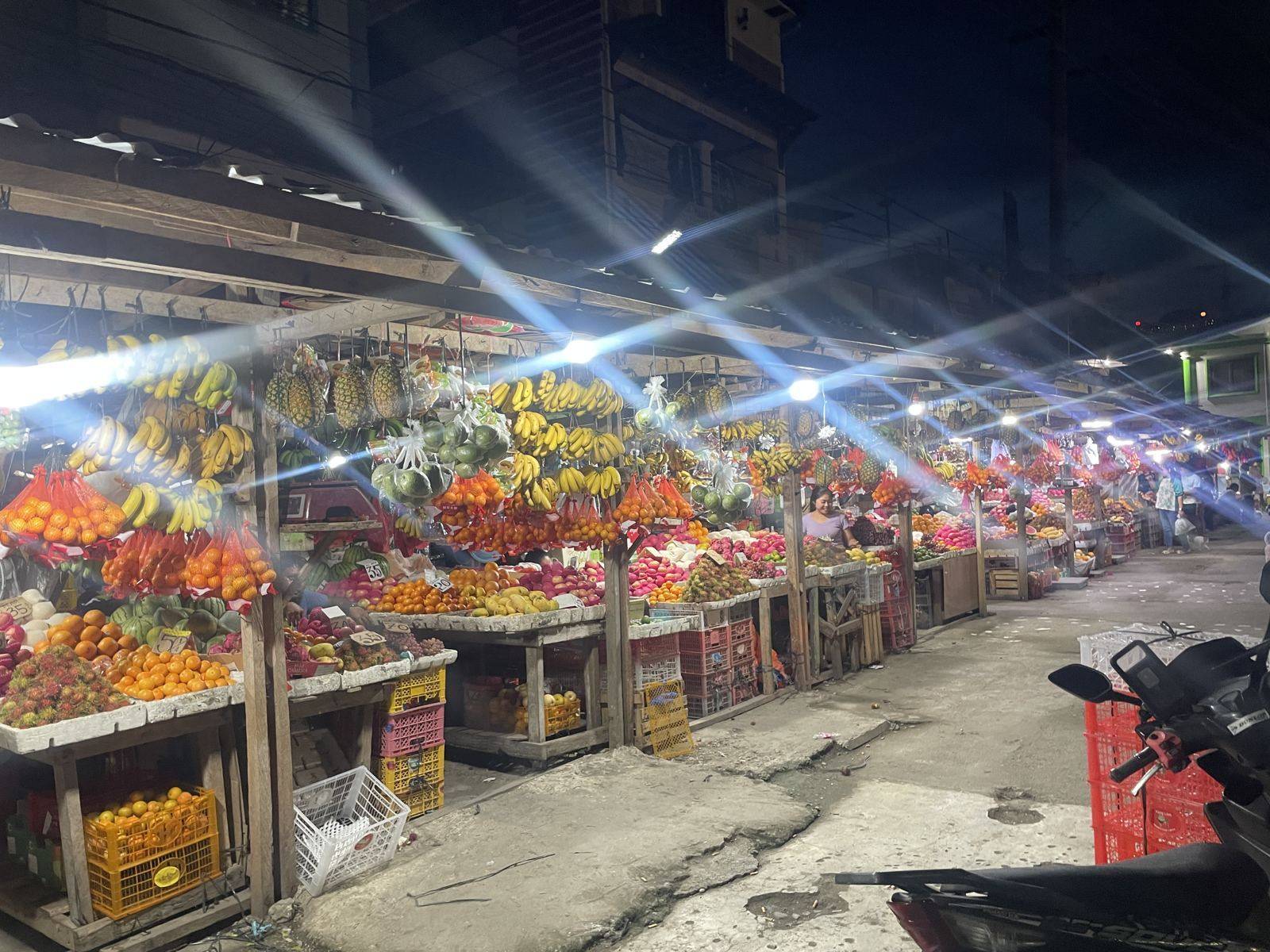
Right next to LCC Mall & Supermarket on Quezon Street, a row of fruit stalls runs along the pavement. It is not a tourist attraction and nobody will hand you a leaflet. It is simply where people in Masbate City buy their fruit, and it stays open long after the supermarket lights behind it have gone off.
It is worth ten minutes of your time, and it will cost you less than a coffee.
Why buy here rather than inside
The supermarket sells fruit too, weighed and wrapped. The stalls outside sell the same fruit, usually cheaper, usually riper, and always negotiable. More to the point, the stalls carry what actually came in that week: the mangoes from the province, the pineapples off the Bicol trucks, the lanzones nobody bothers to stock indoors.
If the pile looks enormous, that fruit is in season and cheap. If there are only three of something sitting on a plate, it isn't.
What to look for
- Mango, the reason to stop. Peak season runs roughly March to June, when the carabao mangoes come in heavy and the price drops. Ask for hinog (ripe) to eat today, hilaw (green) if you want them firm, green mango with bagoong is a local snack in its own right.
- Banana: several kinds, and they are not interchangeable. Lakatan to eat as-is, saba to fry or grill, señorita (the tiny sweet ones) for kids.
- Pineapple, usually trucked in from the Bicol mainland. Vendors will peel and core it for you on the spot; ask and they'll do it while you wait.
- Pomelo, lanzones, rambutan: seasonal, and worth grabbing when you see a pile of them.
- Buko (young coconut), often a stall or two along the same stretch. They'll open it, you drink it there, and they'll scrape out the flesh afterwards if you ask.
- Calamansi: sold by the small bag, and you will use them for everything.
How it works
Prices are per kilo and are not printed anywhere. Ask "tagpira?" (how much?): the vendor will tell you, and there is usually a little room, especially if you buy more than one kilo or shop late in the day when they'd rather not carry it home.
Bring small bills. Nobody enjoys breaking a ₱1,000 note for a ₱80 bag of calamansi.
Bring a bag if you can. You'll be handed a thin plastic one otherwise.
When to go
Late afternoon into the evening is the busiest and the best. The stalls are lit, the fruit has been restocked, and the whole strip beside LCC comes alive at the same time as the food carts. Mornings are quieter and the choice is just as good.
Sunday tends to be busy. Right after a typhoon, expect thin stock and higher prices for a week or so: everything comes in by boat.
Where exactly
Quezon Street, along the side of LCC Mall & Supermarket, in the middle of the city. From the boulevard it is a five-minute walk, or a short tricycle ride from anywhere in town. The public market (wet section, fish at dawn) is a separate place, down beside the port.
More of the city's food, from the lechon stands to the fish port: street food & markets →. Prefer a table? The restaurants guide →.
Do you run a stall here? Create your free listing: photos, what you sell, and a pin on the map so people can find you.